
5-Day Wing Chun
Training Camp with
Sifu Nima King
A small-group, structured intensive designed to accelerate your Wing Chun through direct correction, focused training, and uninterrupted progression.
Limited Spots Available
5-Day Wing Chun Training Camp
with Sifu Nima King
A small-group, structured intensive designed to accelerate your Wing Chun through direct correction, focused training, and uninterrupted progression.
Limited Spots Available
September 6-12, 2026
6 nights/7 days
Hong Kong
Sai Kung
5 Days of Structured
Progressive Training
For Participants Serious About Refining Their Wing Chun
Join Mindful Wing Chun this September
to train where Wing Chun was developed and refined
Join Mindful Wing Chun this September
to train where Wing Chun was developed and refined
This first residential camp brings practitioners together in Hong Kong, where
Wing Chun was developed and refined.
For Mindful Wing Chun, and within the Chu Shong Tin lineage, this format has
not been offered before. Over five days, you will engage in focused training,
structured progression, and direct work with Sifu Nima King.
Away from the demands of daily life, work, and routine, you can focus fully on
your training without interruption.
What Makes This Camp Special
First Comprehensive
MWC Camp (CST Lineage)
The first residential Mindful Wing Chun training camp led by Sifu Nima King, bringing together a structured, in-person training experience that has not previously been offered in this format.
1
Direct Guidance from
Sifu Nima King
Train under direct supervision with continuous correction and refinement, helping you to adjust and improve your practice in real time.
2
Structured
Progression
Each session builds on the previous one, creating a continuous training process that supports deeper understanding rather than isolated repetition.
3
Small Group
Residential Experience
A limited group and residential setting remove the interruptions of daily life, allowing you to focus fully on your training.
4
Training Camp Details
Pricing
- Shared Room
HKD 16,000
(~$2,050 USD)
- Single Room
HKD 19,000
(~$2,430 USD)
*Single rooms are limited and allocated on availability
Dates
- Check-in: September 6 (Sunday)
- Training: September 7-11 (5 days)
- Check-out: September 12 (Saturday)
What's Included
- 30+ hours of structured, progressive training
- Accommodation at WM Hotel (6 nights)
- Breakfast and lunch provided
- Access to indoor and outdoor training spaces
- Access to wellness facilities
- Bonus: 1 week of training at MWC Headquarters
A Setting That Supports Training
The WM Hotel in Sai Kung provides the ideal environment for focused practice and recovery.
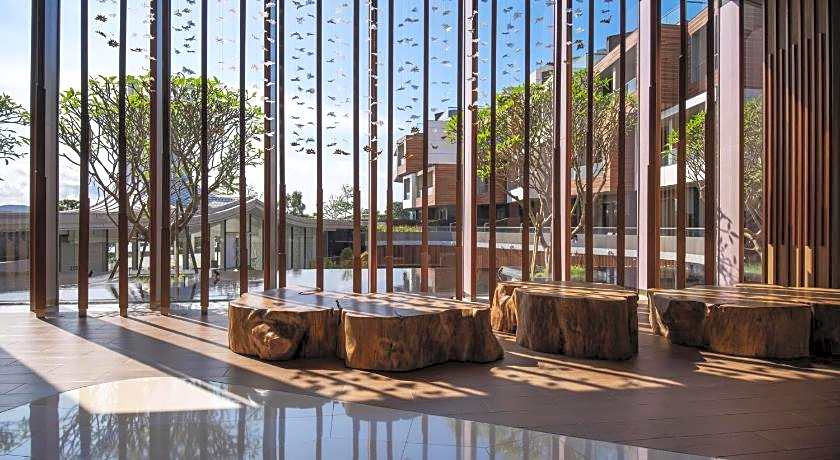
The camp is based at the WM Hotel, providing a comfortable setting where training, rest, and recovery are all integrated.
Participants stay on-site, allowing the entire experience to remain connected and uninterrupted.
For further information please browse the hotel website here
Training Spaces
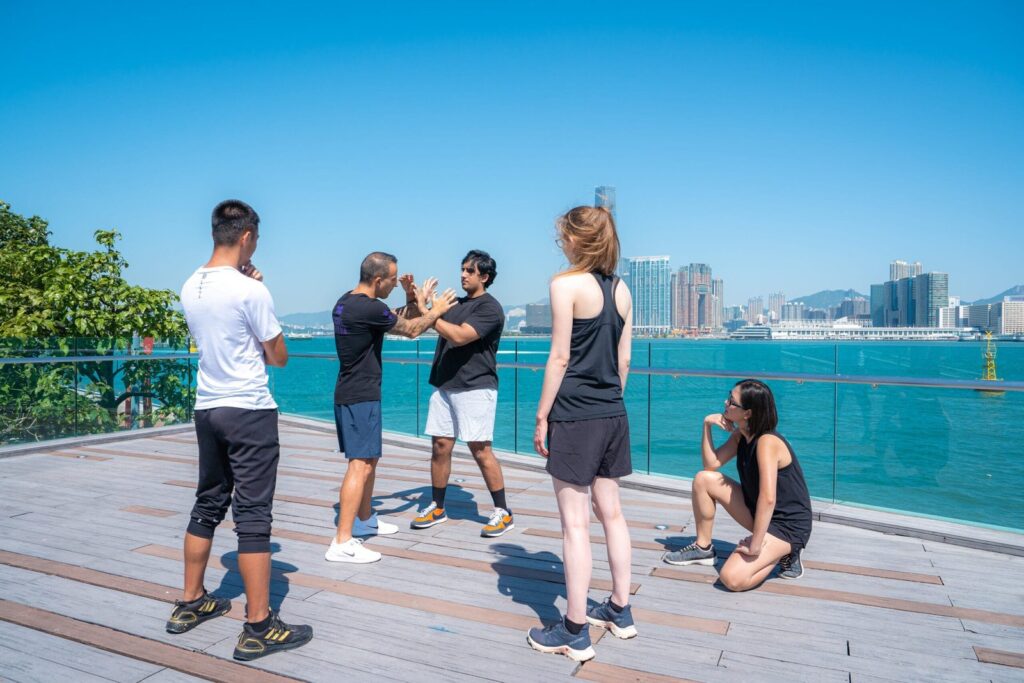
Sessions take place both indoor and outdoor:
- Outdoor: beach and open coastal areas
- Indoor : dedicated function rooms
This allows training to adapt to different conditions while maintaining focus and structure.
Facilities for Recovery
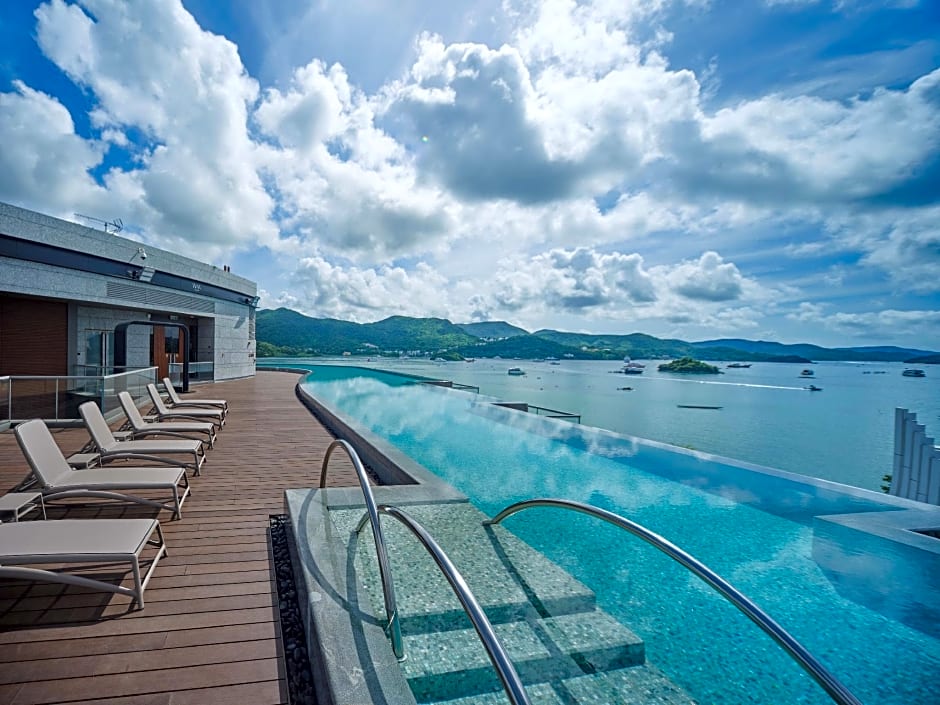
Participants have access to:
- Gym
- Pool
- Sauna
- Wellness facilities
Supporting recovery between sessions and helping maintain energy across the five days.
A Typical Training Day
Each day follows a consistent rhythm: Balancing focused training, recovery, and time to integrate what you’ve learned.
First Training Session
*Locations may change due to weather conditions
Midday - Lunch & Recovery
Time to rest, refuel, and reset between sessions.
Second Training Session
Structured training to refine and build on the morning’s work, with continued guidance and feedback.
Evening - Rest or Informal Exchange
Space to recover, reflect, or connect with other participants in a relaxed setting.
Curriculum
DAY 1
Alignment, Taigung, Seng & Elastic Body Connection
Focus: setting up the body correctly and developing a clearer sense of internal connection.
Students will work on alignment, Taigung, Seng, and the relationship between the spine, pelvis, ribcage, legs, arms, and head.
We will also begin using partner feedback and appropriate pressure testing to help students feel where connection is present, where force is leaking, and what needs to be adjusted.
This is important not only for martial arts, but also for developing a healthier relationship between the body, breath, mind, and nervous system.
DAY 2
Wing Chun Forms & Internal Principles
Focus: using the forms to understand the deeper principles behind the practice.
We will work with the three empty-hand forms and selected applications from the Wooden Dummy form.
The focus will be on using the forms to explore interconnection, relaxation, force transmission, elastic recoil force generation, intention, and whole-body movement.
We will also look at common mistakes people make in the forms, especially mistakes that can reduce the benefit of training or create negative changes in the body over time.
Rather than treating the forms as fixed sequences to repeat, we will use selected movements to understand the deeper reasons behind the practice.
DAY 3
Chi Sau, Elastic Force & Fluid Response
Focus: developing fluidity, continuity of force, elastic loading, and automatic response.
A major part of the camp will be dedicated to Chi Sau.
The aim is to learn how to handle and transmit force through the contact point, rather than fighting at the contact point.
DAY 4
Pressure, Timing, Speed & Practical Scenarios
Focus: testing whether the connected state can be maintained under more dynamic conditions.
As the connected state becomes clearer, we will begin to challenge it more.
This day will explore whether students can keep their structure, relaxation, and body connection while moving, changing, responding, and working under more pressure.
Training may include pressure testing, dynamic partner exercises, Chi Sau-based testing, and controlled practical scenarios.
The aim is to see how much of the internal work can be retained when the situation becomes faster, more dynamic, or less predictable.
DAY 5
Nim Lik, Internal Cultivation, Integration
& Personal Direction
Focus: bringing the main themes of the camp together and giving students clearer direction for continued training.
The final day will include Nim Lik, stillness-based standing practices, internal cultivation, body awareness, and guidance on how the mind, body organisation, relaxation, and intention can affect movement and power.
The goal is for students to leave with a clearer understanding of:
what they are feeling in their own body,
where their practice needs refinement,
and how to continue developing the internal side of Wing Chun after returning home.
Apply For The Training Camp
Step 1: Submit your application
Step 2: We carefully review your application and will be in touch shortly to confirm availability and next steps
Step 3: You receive a secure payment link to reserve your place with a non-refundable deposit
*Once your place is confirmed, we'll guide you through the remaining details and preparation.
Please contact us with any questions.
We want to ensure you have all the information you need and are always happy to hear from fellow Wing Chun enthusiasts.
FAQs
Places are limited and allocated on a first-come, first-served basis.
Do I need to be advanced?
The curriculum is structured to accommodate different levels. Both beginners and
experienced practitioners can benefit, provided they are willing to engage fully in the
training.
How are shared rooms assigned?
Shared rooms are assigned based on gender and, where possible, personal preferences.
What if I arrive late?
Late arrivals can be arranged with prior notice. Please inform us in advance so we can
coordinate your check-in.
What is Not Included?
- Flights
- Airport transfers
- Dinner
- Optional activities
(can be arranged with the hotel in advance by a personal
confirmation)
Can I join the camp without accommodation?
If you already have your own accommodation arranged, please contact
us directly and we can discuss available options.
How many people are in a shared room?
Each shared room accommodates two participants.